How many countries can you really see in 10 days in Europe?
Two countries, at most three, fit in 10 days in Europe. See our simple day maths, five realistic 10-day routes and a quick test for your own plan.
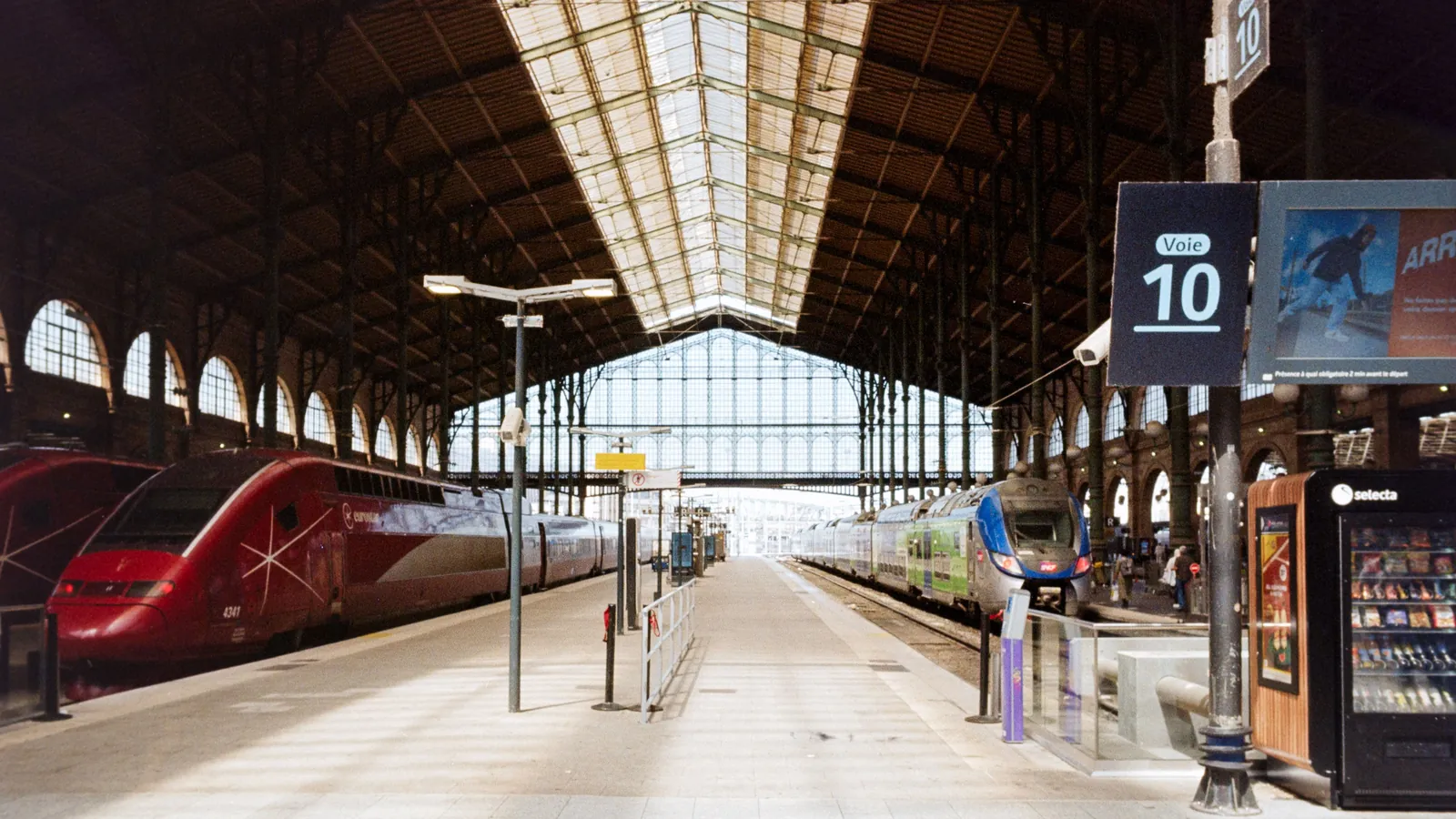
How many countries can you see in 10 days in Europe? Two is a good number. Three is the most we would plan. Four countries only work in about 14 days. The reason is not the map. It is the time you lose on the way.
This guide shows the simple maths behind that answer. Then it gives five realistic 10-day routes with the main train links. At the end you will find a short test for your own plan.
Why 10 days is shorter than it sounds
Ten days on paper is not ten days of sightseeing. Three things cut into your sightseeing time.
The arrival day is half a day. A direct flight from Singapore to London takes about 14 hours, longer if your route is diverted. Many people feel tired for the first days, because you fly west and Europe is several hours behind most of Asia. Plan something gentle on day 1.
The last day is also short. Most flights home leave in the morning or early afternoon. We count day 10 as half a day.
Every move between cities costs time. You check out, go to the station, travel, find your hotel and check in. As a rule of thumb, we count half a day for each move, even on a fast train. This is our own estimate, not an official figure.
The simple maths: 2 countries, 3 countries or 4
Here is our counting. We assume 10 calendar days, half a day lost on arrival, half a day on departure, and half a day for each move between countries.
| Countries | Moves between them | Usable days | Days per country |
|---|---|---|---|
| 1 | 0 | 9 | 9 |
| 2 | 1 | 8.5 | about 4 |
| 3 | 2 | 8 | under 3 |
| 4 | 3 | 7.5 | under 2 |
With four countries you have less than two days in each. That is too short to see a city and rest. In 14 days the same four countries give about 11.5 usable days, close to three days each.
These numbers are a rule of thumb. A long train makes the cost higher. Barcelona to Seville, at about 5h18 by train, is a good example.
One more point. Three cities are not always three countries. Rome, Florence and Venice are three cities in one country, and that is the easiest kind of 10-day trip.
Five 10-day routes that work
In every route, day 1 is the arrival day and day 10 is the departure day. Train times are the fastest scheduled train shown by the operator today. They are indicative and can change with the timetable, so check your own date.
1. London, Paris and Amsterdam
Why go? Three famous capitals and two fast train journeys. It is the busiest of our five routes, and the one with the most paperwork.
How long? London days 1–3, Paris days 4–6, Amsterdam days 7–9, fly home on day 10. Fly into London and out of Amsterdam, so you never go back.
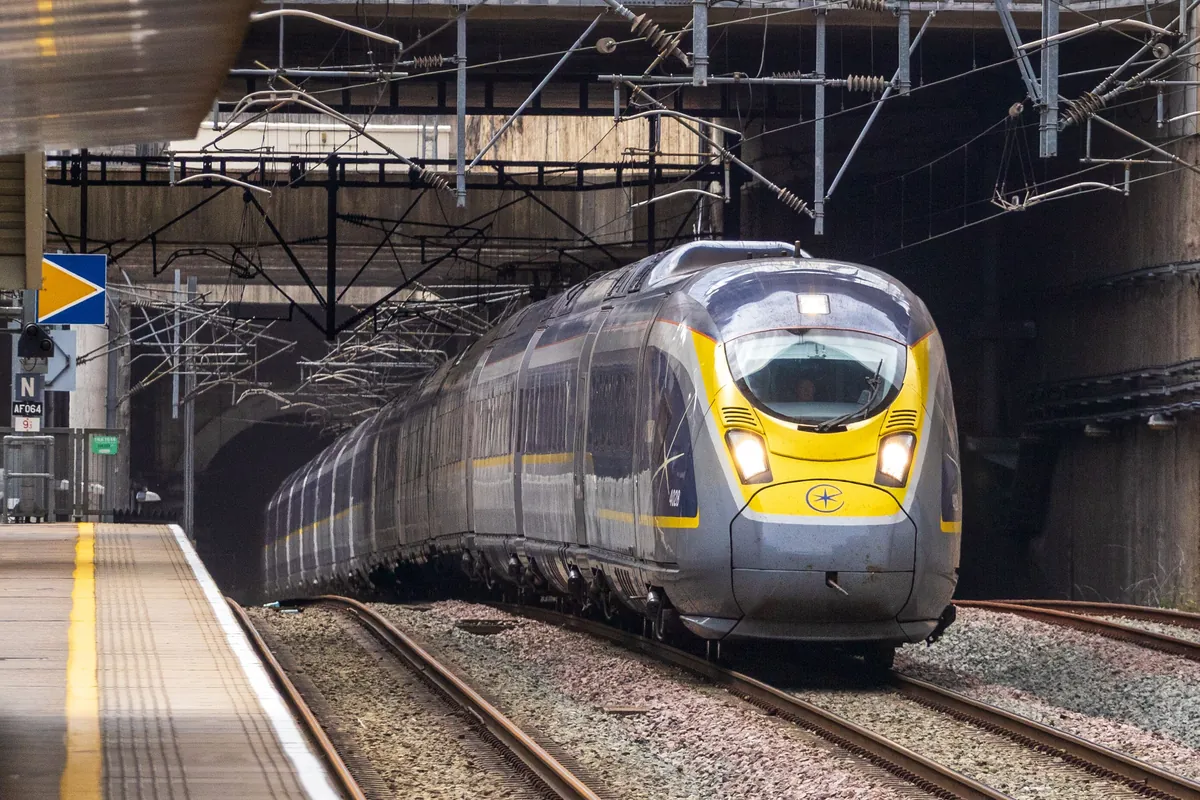
Getting there: London to Paris takes from 2h16 by Eurostar, the high-speed train under the Channel. Paris to Amsterdam takes about 3h20, also by Eurostar. That is under six hours on trains in total. Seats can sell out well ahead in busy seasons, so reserve early.
This route uses two entry systems. The UK is outside the Schengen area, the 29 countries that share one short-stay visa. When you go into the UK, many passports need a UK ETA, which costs £20, and others need a UK visa. Read the section on the UK below before you decide. For a lighter trip, keep London and Paris and drop Amsterdam: two countries, one move.
2. Paris, Switzerland and Italy
Why go? You see Paris first, then the lakes and mountains around Lucerne, then Italy. It is the most tiring of the five. Choose it only if long train days do not worry you.
How long? Paris days 1–3, a base in Lucerne days 4–6, Venice or Rome days 7–9, and fly home from Italy on day 10.
Getting there: Paris to Zurich takes about 4h04 by TGV Lyria, the French–Swiss high-speed train, from Paris Gare de Lyon. For Lucerne and the way on to Milan, check the timetable of Swiss Federal Railways (SBB). From Milan to Rome, the fastest Frecciarossa takes about 2h50. Frecciarossa and Italo are Italy’s two high-speed train brands.
Added together, the trains take more than 10 hours in total, plus changes. For that reason we would cut one country. Paris and Italy, or Switzerland and Italy, make a calmer trip. In high season, the trains between Italy and Switzerland are often full, so reserve your seat early. For the first part of the trip, read our guide to your first time in Paris.
3. Rome, Florence and Venice
Why go? One country, one border entry and three very different cities. For a first trip this is the route we trust most in 10 days.
How long? Rome days 1–4, Florence days 5–7, Venice days 8–9, and fly home on day 10. If you fly into Rome, leave from Venice.
Getting there: Rome to Florence takes just over 1h30 on Trenitalia. For Florence to Venice, check Trenitalia or Italo for the current time. If you start or end in Milan, the fastest Milan to Rome train takes about 2h50. Reserve seats early for the high-speed trains.
4. Barcelona, Madrid and Seville or Granada
Why go? Spain has a large high-speed network and clear contrast: Barcelona on the coast, royal Madrid and Andalusia in the south. All three stops are in one country.
How long? Barcelona days 1–3, Madrid days 4–6, Seville or Granada days 7–9. On day 10, fly home from Madrid, or from Seville if your airline serves it. If you leave from Madrid, take the train back there on day 9 or early on day 10.
Getting there: Barcelona to Madrid takes from 2h30, with several operators. Madrid to Seville takes from 2h30, and Madrid to Granada from 3h30. So each link is between two and a half and three and a half hours. The link to avoid is Barcelona to Seville: the train takes from 5h18. For Seville to Granada, check the operator’s timetable.
5. Vienna, Prague and Budapest
Why go? Three compact capitals in Central Europe, all in the Schengen area. They are close enough for a simple route.
How long? Prague days 1–3, Vienna days 4–6, Budapest days 7–9, and fly home on day 10. This order avoids the longest link, which is Prague to Budapest.
Getting there: There are direct trains between Prague and Vienna and between Vienna and Budapest. Check ÖBB (Austrian Federal Railways) and ČD (Czech Railways) for times on your date.
You cross two internal Schengen borders. Checks there are not normal, but carry your passport, because countries can bring them back for a time. If you travel in late November or December, our guide to Christmas markets for first-timers shows when the markets open.
Fly into one city, out of another
An open-jaw ticket lets you land in one city and fly home from another. You do not go back to your first city. On a route that runs in one direction, this saves about half a day and a train ride.
For example, you can land in London and fly home from Amsterdam, or land in Rome and fly home from Venice. Not every airline serves every city, so the best choice depends on your airline and dates. Prices vary, so compare an open-jaw ticket with a return ticket before you reserve.
The UK is a separate step
The UK is not in the Schengen area, and a Schengen visa does not cover it. If you add London, you add a second entry system.
- Eligible passports need an ETA. The UK Electronic Travel Authorisation costs £20. Eligible nationalities include Singapore, Malaysia, Japan, South Korea, Hong Kong, Macao, Brunei and the Gulf states. Taiwan passports are eligible only with an ID number. Apply on the official page, gov.uk/eta. Other websites may charge more.
- Other passports need a UK visa. If you hold a passport from India, the Philippines, Indonesia, Vietnam or China, use the UK visit visa checker on GOV.UK to see what you need. The Standard Visitor visa costs £135.
- Leaving the UK by Eurostar. Going from London to Paris, you register for the EU’s Entry/Exit System (EES), which takes fingerprints and a photo of non-EU visitors, at the departure station on the day of travel. Allow extra time. Our Schengen visa, EES and ETIAS guide explains the system.
All the entry rules are collected in our visas and entry section.
Do you need a rail pass?
An Interrail Pass gives you travel on many European trains. Eurail, the pass for travellers from outside Europe, has been sold as Interrail since September 2026. It is the same product with a new name.
For 10 days, a pass is not always the best choice. Seat reservations are not included in the pass. They are usually needed on high-speed, international and night trains, and the railway companies set the fee. Some regional trains need no reservation, but they are slower.
So the pass does not remove the cost of fast trains. Before you buy, add up the single tickets for your own route and compare them with the pass price plus reservations. On a short trip with two or three long journeys, single tickets can be the simpler choice. Read the official page on when you need a seat reservation.
A quick test for your own plan
Before you reserve anything, check your plan against this list.
- Do you have two or three countries, not four or more?
- Does each city get at least two full nights?
- Do you count half a day for arrival, departure and each move?
- Is any single train journey longer than four hours? If yes, can you shorten the route?
- Can you land in one city and fly home from another?
- Have you checked the entry rules for your passport, including the UK if you add London?
- Have you looked at the operator’s site for seat reservations on high-speed trains?
- Does your plan leave one slow morning after the long flight?
If you answer no to several of these, remove one stop. A shorter route usually feels better.
Where to start
Start with the entry rules for your passport. Then choose your first city and build the rest of the route from there. Keep it simple: fewer places, fewer moves, more time in each city.
Before you go
- Fly
- Consider arriving in one city and leaving from another (open-jaw)
- Trains
- Reserve seats early on high-speed and night trains; Eurostar can sell out well ahead in busy seasons
- UK
- Separate entry step: ETA £20 for eligible passports, otherwise a UK visa (checked in October 2026)
- Times
- Train times shown are the fastest scheduled train today; check the operator for your date
Checked in October 2026
Questions people ask
How many countries can I see in 10 days in Europe?
We recommend two, and three at most. With a long flight, jet lag and half a day lost on each move, you have about 8 usable days. Three countries then give you under three days each. Four countries are a better fit for a 14-day trip.
How many days are enough for a first trip to Europe?
For a first trip, 10 days is enough for two or three cities in one or two countries. If you want four countries, plan 14 days. Fewer places mean less time on trains and more time to enjoy each city.
Is it better to fly into one city and out of another?
Often yes, if the route runs in one direction. You do not need to return to your first city, which saves about half a day. Prices vary, so compare the open-jaw ticket with a return ticket before you choose.
Do I need a rail pass for 10 days in Europe?
Not always. A pass helps when you take several train journeys, but seat reservations cost extra on most fast trains. Add up single tickets for your own route and compare the total with the pass before you buy.
Is the UK part of the Schengen area?
No. The UK has its own entry rules. Some passports need an ETA that costs £20, and others need a UK visa. A Schengen visa does not cover the UK, so check your passport before you add London.
Official sources
- GOV.UK: Electronic Travel Authorisation (ETA)
- GOV.UK: Check if you need a UK visa
- GOV.UK: Standard Visitor visa
- Interrail: How to know when you need a seat reservation
- European Commission: Temporary reintroduction of border control
- European Commission: Entry/Exit System (EES)
- Eurostar: London to Paris
- TGV Lyria: Paris to Zurich
- Trenitalia: Our destinations
- Spain.info: Explore Spain on high-speed trains